
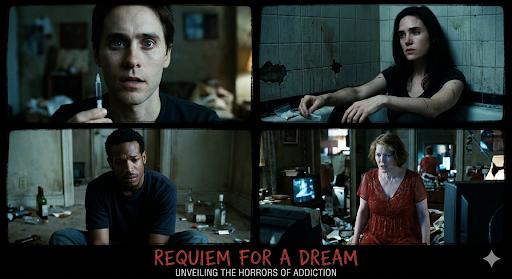
Darren Aronofsky’s Requiem for a Dream isn’t just a film; it’s a visceral experience. It’s a plunge into the dark abyss of addiction, exploring its devastating impact on the human psyche and body. The film doesn’t shy away from depicting the raw, unflinching reality of chasing unattainable dreams, fueled by substances that ultimately consume and destroy.
Have you ever witnessed someone’s life spiral out of control due to addiction? Requiem for a Dream magnifies that descent, forcing us to confront the ugly truth about the allure and the consequences of chasing illusions.
A Symphony of Despair: The Plot Unfolds
The film intertwines the stories of four characters, each grappling with their own form of addiction:
- Sara Goldfarb: An elderly widow, consumed by the dream of appearing on her favorite television show, becomes addicted to diet pills.
-
- Harry Goldfarb: Sara’s son, a heroin addict, dreams of striking it rich with his friend Tyrone.
-
- Tyrone Love: Harry’s best friend, also a heroin addict, shares the same dream of financial freedom.
-
- Marion Silver: Harry’s girlfriend, an aspiring fashion designer, gets entangled in the web of addiction and prostitution.
As their addictions intensify, their dreams morph into nightmarish realities. The film masterfully portrays the progressive deterioration of their physical and mental states, leaving a lasting impact on the viewer.
Why Requiem for a Dream Resonates So Deeply
- Several factors contribute to the film’s powerful and disturbing impact:
- Unflinching Realism
- Aronofsky doesn’t sugarcoat the grim realities of drug abuse. He presents the physical and psychological effects in a raw and unsettling manner.
- Relatable Characters
- Despite their flaws, the characters are deeply human. Their desires, hopes, and vulnerabilities make them relatable, even as they succumb to their addictions.
- Powerful Visuals and Sound
- The film’s striking visuals, including rapid-cut editing and extreme close-ups, combined with Clint Mansell’s haunting score, create an atmosphere of mounting tension and despair.
Exploration of Multiple Addictions
The film showcases addiction in various forms, including drug abuse, media addiction, and the pursuit of unattainable beauty standards. This multifaceted approach broadens the film’s scope and relevance.
Thematic Depths: More Than Just Addiction
While addiction is the central theme, Requiem for a Dream explores other profound concepts:
-
- The Illusion of Dreams: The film highlights the dangers of chasing unrealistic or unsustainable dreams.
-
- The Destructive Power of Hope: Ironically, the characters’ hopes and aspirations become the very instruments of their downfall.
-
- The Loneliness of Isolation: Each character experiences a profound sense of isolation, further exacerbating their dependence on their respective addictions.
-
- The Societal Pressures: The film subtly critiques the societal pressures that contribute to addiction, such as the pursuit of beauty and wealth.
Analyzing the Characters’ Downfall
- Each character’s journey is a cautionary tale:
- Sara Goldfarb: Her desire to fit into an idealized image of beauty leads her to become addicted to diet pills, resulting in psychosis and institutionalization.
- Harry Goldfarb: His ambition to become a successful drug dealer and provide for Marion is overshadowed by his heroin addiction, ultimately leading to the loss of his arm and his freedom.
- Tyrone Love: His dream of escaping poverty is shattered by his addiction, resulting in imprisonment and a life of despair.
- Marion Silver: Her aspirations of becoming a fashion designer are destroyed by her heroin addiction, forcing her into prostitution and a life of degradation.
The Lasting Impact of Requiem for a Dream
Requiem for a Dream remains a relevant and powerful film due to its unflinching portrayal of addiction and its exploration of universal human themes. It serves as a stark reminder of the dangers of chasing illusions and the importance of confronting reality.
Controversies and Critical Acclaim
The film’s graphic content has sparked controversy, but it has also received widespread critical acclaim for its artistic merit and its powerful message. Ellen Burstyn’s performance as Sara Goldfarb is particularly lauded, earning her an Academy Award nomination.
A Cult Classic for a Reason
Requiem for a Dream has become a cult classic, resonating with audiences who appreciate its artistic vision and its unflinching exploration of the human condition.
Frequently Asked Questions (FAQ)
What is the main message of Requiem for a Dream?
The film’s primary message is the destructive nature of addiction and the dangers of chasing unrealistic dreams. It highlights how addiction can consume and destroy individuals, leading to devastating consequences.
Is Requiem for a Dream based on a true story?
The film is based on a novel of the same name by Hubert Selby Jr. While not a direct adaptation of a specific true story, it draws inspiration from Selby’s own experiences with addiction and the stories of people he knew.
Why is the film so disturbing?
The film’s disturbing nature stems from its unflinching portrayal of the physical and psychological effects of addiction, as well as its exploration of themes such as isolation, despair, and the loss of innocence.
Who is Sara Goldfarb in Requiem for a Dream?
Sara Goldfarb is one of the four main characters in the film. She is an elderly widow who becomes addicted to diet pills in her pursuit of appearing on her favorite television show.
Conclusion
Requiem for a Dream is more than just a movie about addiction; it’s a disturbing yet necessary exploration of the human condition. It forces us to confront the dark side of dreams and the devastating consequences of unchecked desires. The film’s power lies in its ability to make us feel uncomfortable, to challenge our perceptions, and to leave us with a lingering sense of unease. Ultimately, it serves as a potent reminder of the importance of self-awareness, resilience, and the pursuit of genuine, sustainable happiness.