Hitting your daily protein goals shouldn’t mean sacrificing the foods you love. If you track your macros, you already know the struggle. You eat your chicken, drink your shakes, and eventually, a massive sugar craving hits.
You try baking a healthy treat, but it comes out of the oven tasting like a sweet hockey puck. Sound familiar?
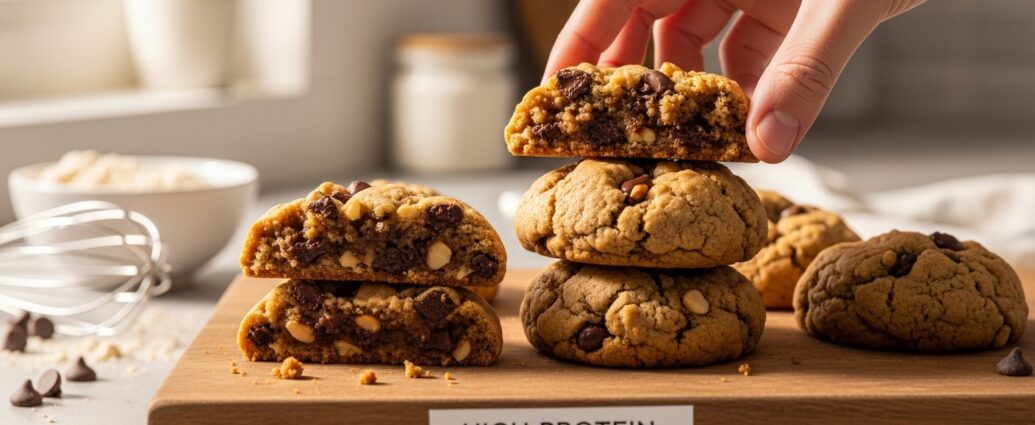
Baking with protein powder is notoriously difficult. But mastering **high protein soft cookies** will completely change your meal prep game. You can absolutely enjoy a warm, gooey, chocolate chip cookie that helps you build muscle and recover from workouts.
Let’s look at exactly how to bake soft, macro-friendly cookies that rival your favorite bakery treats.
Key Takeaways
Avoid 100% whey isolate: It dries out quickly when baked. Use a whey/casein blend or plant-based protein instead.
Moisture is everything: Additions like Greek yogurt, pumpkin puree, or applesauce keep the texture soft and chewy.
Do not overbake: Protein cookies cook much faster than traditional cookies. Pull them out while they still look slightly underdone.
Do not replace all flour: You still need a base like oat flour or almond flour to hold the cookie together.
Why Most Protein Cookies Turn Out Like Cardboard
If you have ever tried swapping standard baking flour for protein powder at a 1-to-1 ratio, you already know it is a disaster.
Traditional cookies rely on gluten, butter, and sugar to create that classic soft, chewy texture. Protein powder lacks the structural properties of flour. When exposed to heat, protein powder quickly absorbs all the liquid in your dough and essentially cooks into a dry sponge.
To make high protein soft cookies, you have to trick the ingredients. You need to introduce extra moisture and use the right type of powder to prevent the cookies from drying out in the oven.
The Secret Ingredients for High Protein Soft Cookies
Baking healthy treats requires a slightly different pantry than traditional baking. Here are the exact ingredients you need to guarantee a soft, bakery-style texture.
1. The Right Protein Powder
Not all protein powders act the same under heat.
Whey isolate is fantastic for post-workout shakes, but it is terrible for baking. It turns rubbery when heated. Instead, opt for a **whey and casein blend**. Casein absorbs moisture much better and stays thick, mimicking the texture of traditional flour.
If you avoid dairy, plant-based proteins (like pea or soy blends) also bake exceptionally well because they retain a lot of moisture.
2. A Solid Flour Base
You cannot use protein powder alone. You need a structural base.
**Oat flour** is a fantastic choice because it is naturally gluten-free, affordable, and holds onto moisture. **Almond flour** is another great option. It adds healthy fats to the dough, which naturally softens the final cookie.
3. Moisture Retainers
Because protein powder is so dry, you need wet ingredients that lock in hydration.
Plain Greek yogurt is a baker’s best friend. It adds extra protein and creates a soft, cake-like texture. Unsweetened applesauce or mashed bananas are also excellent choices, though they will add a slight fruity flavor to your cookies.
4. Healthy Fats
Traditional cookies use sticks of butter. For a macro-friendly approach, use natural nut butters.
Peanut butter, almond butter, or cashew butter provide the fat necessary to keep the cookie tender. Coconut oil is another great alternative that helps crisp the edges while keeping the center gooey.
Common Mistakes When Baking High Protein Soft Cookies
Even with the right ingredients, technique matters. Avoid these common pitfalls to ensure your healthy cookies turn out perfectly.
Mistake 1: Overbaking the Dough
This is the number one reason protein cookies fail. High-protein baked goods dry out incredibly fast. If you leave them in the oven until they look fully hard and crispy, they will be rock-solid once they cool. Pull them out when the edges are set, but the centers still look incredibly soft.
Mistake 2: Skipping the Fat Entirely
In an effort to keep calories as low as possible, many people remove all fats from their recipes. Fat is a tenderizer. Without at least a little bit of nut butter or coconut oil, your cookies will end up dense and chewy in a bad way.
Mistake 3: Skipping the Dough Chilling Process
If you want thick, soft-baked cookies, put your dough in the fridge for 30 minutes before baking. Chilling solidifies the fats in the dough. This prevents the cookies from spreading out too thin and baking too quickly in the oven.
An Easy High Protein Soft Cookies Recipe
Ready to bake? Here is a foolproof recipe for peanut butter chocolate chip protein cookies that actually taste incredible.
Dry Ingredients:
1/2 cup oat flour
1 scoop (about 30g) vanilla or chocolate whey/casein protein powder
1/2 tsp baking soda
A pinch of sea salt
Wet Ingredients:
1/3 cup natural creamy peanut butter
1/4 cup sugar-free maple syrup (or pure maple syrup)
1 large egg
1 tsp vanilla extract
2 tbsp unsweetened almond milk
Add-ins:
2 tbsp dark chocolate chips
Step-by-Step Instructions
1. Preheat and Prep: Preheat your oven to 350°F (175°C). Line a baking sheet with parchment paper.
2. Mix the Wet Ingredients: In a large bowl, whisk together the peanut butter, syrup, egg, and vanilla extract until completely smooth.
3. Add the Dry Ingredients: Fold in the oat flour, protein powder, baking soda, and salt. If the dough is too crumbly, add the almond milk one tablespoon at a time.
4. Fold in Chocolate: Gently stir in the dark chocolate chips.
5. Chill (Optional but recommended): Place the bowl in the fridge for 20-30 minutes.
6. Scoop and Bake: Roll the dough into roughly 6 equal balls. Flatten them slightly with your hands (protein cookies do not spread much on their own).
7. Bake: Place them in the oven for 6 to 8 minutes.
8. Cool: Let them rest on the baking sheet for 10 minutes before moving them. They will continue to cook slightly while resting.
How to Store Your Cookies So They Stay Soft
Proper storage is the final step in the process. If you leave protein cookies sitting out on the counter, the air will dry them out overnight.
Always store your baked goods in an airtight container at room temperature. For an extra layer of protection, place a small slice of sandwich bread inside the container with the cookies. The cookies will pull moisture from the bread, keeping them soft and fresh for up to four days.
If you made a large batch, wrap them individually in plastic wrap and freeze them. You can microwave a frozen cookie for 15 seconds whenever you need a quick, warm, high-protein snack.
Wrapping Up
You do not have to choose between reaching your fitness goals and enjoying a sweet treat. Baking high protein soft cookies is entirely possible once you understand how protein powder reacts to heat.
By using the right protein blend, adding moisture through Greek yogurt or nut butters, and watching your oven time like a hawk, you can bake incredible macro-friendly desserts. Try the recipe above, tweak the add-ins to your liking, and enjoy a healthier way to satisfy your sweet tooth!
Frequently Asked Questions (FAQs)
Can I use whey isolate for baking protein cookies?
It is highly recommended to avoid 100% whey isolate for baking. It dries out quickly and creates a rubbery texture. Use a whey/casein blend or a plant-based protein powder for much softer, better-tasting results.
Why did my protein cookies come out hard?
Your cookies likely came out hard due to overbaking or a lack of moisture in the dough. Protein bakes faster than regular flour. Try reducing your baking time by two minutes and adding a tablespoon of Greek yogurt or applesauce to your next batch.
Are protein cookies actually good for weight loss?
Yes, they can be great for weight loss if they fit into your daily calorie goals. High-protein snacks keep you feeling full longer than traditional sugary treats, which can help reduce overall cravings and snacking throughout the day.
Can I make high protein cookies without eggs?
Absolutely. You can substitute the egg with a “flax egg” (1 tablespoon of ground flaxseed mixed with 3 tablespoons of water, let sit for 5 minutes) or use a quarter cup of unsweetened applesauce to bind the ingredients together.